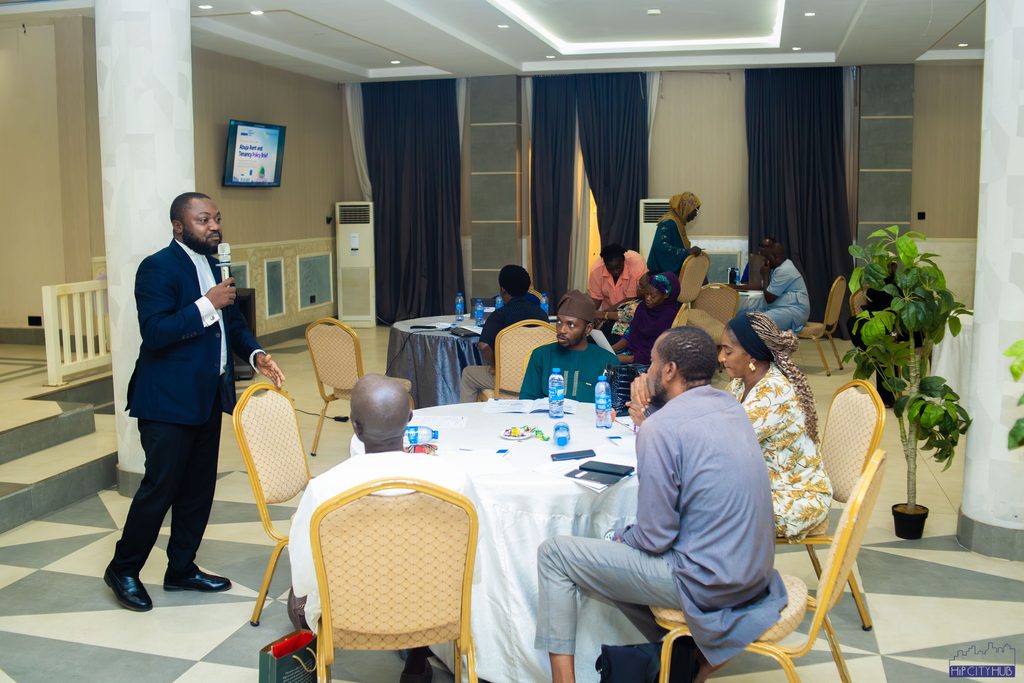
ABUJA, 29 September 2026. For many Abuja residents, rent is more than a monthly bill. It is a question of security, fairness and whether a home is truly affordable. On Tuesday 29 September 2026, HipCity Innovation Centre, with the support of Heinrich Böll Stiftung, brought that conversation into the room as it presented its policy brief, Rent and Tenancy Reform in Abuja: Improving Rental Housing Affordability, Tenant Protection, and Urban Housing Governance, to stakeholders at Hotel 2020, Wuye.

The participants came from public institutions, legal services, academia, the media and civil society. Each introduced themselves by name, organisation and area of residence, a quick reminder of how many different corners of Abuja’s rental story were represented at the table.
The brief grew out of research HipCity carried out in 2025 and later stakeholder engagements. Its recommendations were reviewed in June 2026 validation sessions with tenants, civil society organisations, NGOs, professional bodies and government and institutional stakeholders. Tuesday’s event put the consolidated findings before a wider audience for the first time.
The presentation walked participants through five reform areas:
- Amending and improving administrative tenancy guidelines
- Regulating rent payment practices
- Establishing or strengthening accessible dispute resolution, including alternative dispute resolution
- Professionalising and regulating real estate agents
- Promoting tenant awareness
The floor discussion was lively and practical. Participants raised questions on property management standards, service charges, the link between rent levels and infrastructure, agency charges, access to legal aid, mediation of tenancy disputes, institutional coordination and implementation timelines.
One of the most thought-provoking contributions came from the Legal Aid Council, which noted that some tenancy problems may already be covered by existing contractual and legal mechanisms. The challenge, it suggested, is that many tenants lack the information, resources or confidence to use them. The point strengthened the case for tenant awareness as a core part of the reform agenda.
HipCity stressed that the brief must not end up as “a document on a shelf.” Stakeholders were encouraged to read it, send feedback, offer technical input, open doors to decision-makers and use their platforms to keep the conversation alive. Media representatives were specifically invited to take the issues to interviews, television programmes and newspaper pages. Organisers also noted that collaboration is not only financial: introductions, letters, meetings and expertise all count.
Participants were told that some reform processes could take around 12 months, while others will take longer. Tenant awareness, by contrast, can be pursued continuously. These timelines are expected periods for engagement and implementation, not completed milestones.
Hard copies of the policy brief were distributed at the event, and a digital version is available on HipCity Innovation Centre’s website https://hipcityinnovationcentre.org/rent-and-tenancy-reform-in-abuja-improving-rental-housing-affordability-tenant-protection-and-urban-housing/
The event is part of the Abuja: A City for All project.