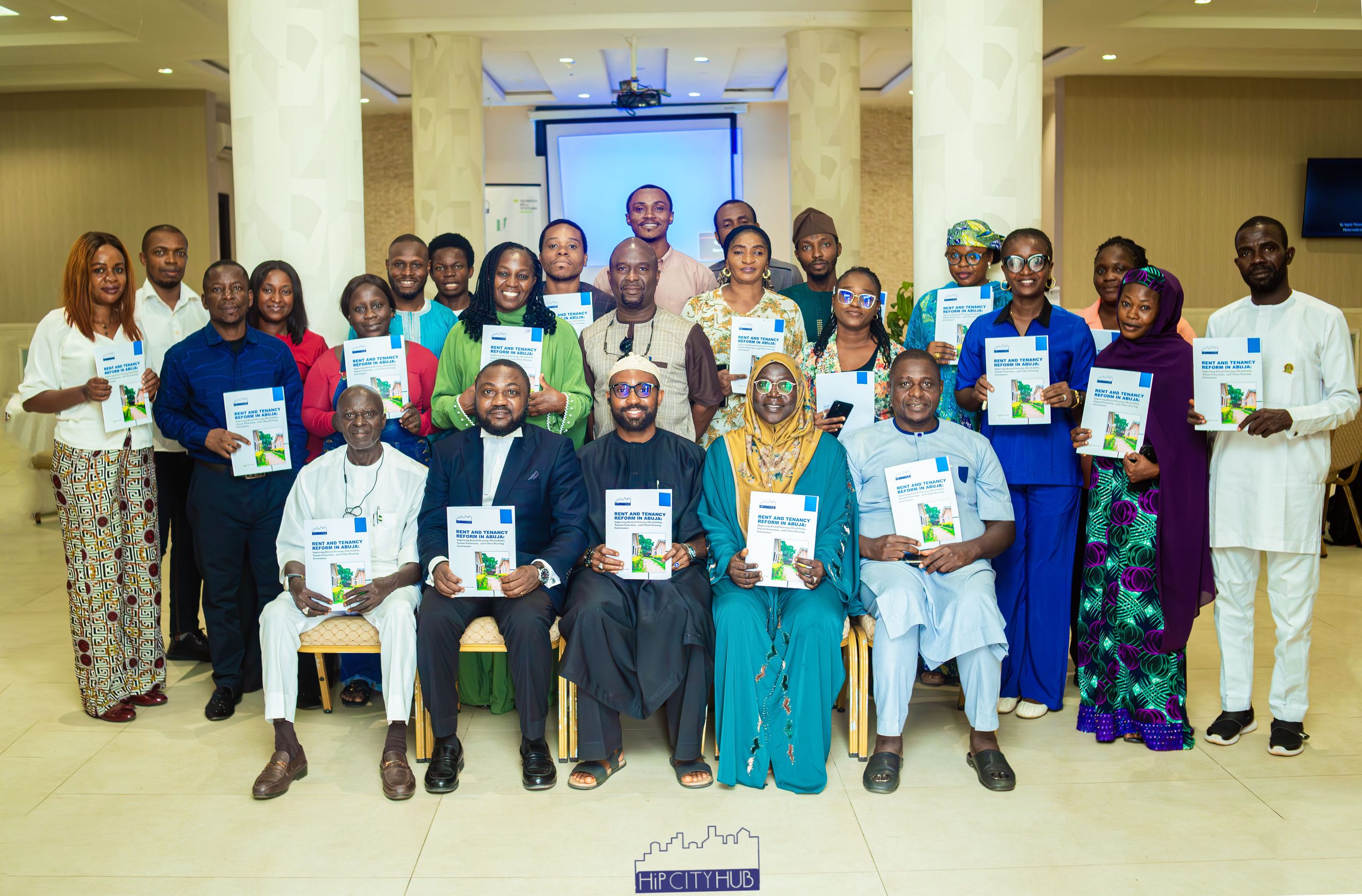
Two days after tenants spoke candidly about what’s broken in Abuja’s rental market, HipCity Innovation Centre returned to the DE Silver Green Luxury Hotel in Gudu on 18 June, this time bringing built environment professionals, civil society organisations, and NGOs into the room to do something different: turn frustration into design.

Executive Director Mr Bassey Bassey opened the session by framing it as a continuation, not a restart. The problem had already been established on 16 June. The task now was figuring out how a policy actually works in practice.
Dr Isola Muyideen returned with her comparative analysis of tenancy regulation in Lagos and Abuja, this time speaking to an audience equipped to interrogate the detail. She placed Abuja’s housing pressure inside a sobering national picture: Nigeria carries a deficit of over seventeen million housing units, and the overwhelming majority of urban residents depend on rented accommodation rather than ownership. Her framing was unambiguous. Universal home ownership isn’t a realistic policy goal. Making renting fair, secure, and transparent is.

The figures she presented sharpened what tenants had already flagged two days earlier. Lagos tenants spend 30 to 50% of income on rent; Abuja tenants spend 40 to 60%, well above the World Bank’s 30% guideline. Lagos landlords typically request six to twelve months’ rent in advance; Abuja landlords routinely demand twelve to twenty-four. Agency fees in Lagos sit at 5 to 15%; in Abuja, 10 to 20%, often with no licensing oversight behind them at all.
But the sharpest part of her presentation wasn’t the numbers. It was the structure. Dr Muyideen described Abuja’s rental market as an architecture of inequality: landlords setting terms unilaterally because no law constrains them, agents operating as an unregulated and often more powerful intermediary layer, and tenants absorbing whatever decisions land on them, with fewer than 10% ever pursuing formal redress through courts that cost more in time and money than most disputes are worth. Government, she argued, holds regulatory authority in name but exercises almost none of it in practice. The reform’s task is to strengthen that fourth actor enough to balance the other three.

The discussion that followed was unusually solution-focused. Participants debated, often sharply, whether Abuja should simply adopt the Lagos tenancy model. Several pushed back hard, pointing out that Lagos itself is still amending a law that has never covered the whole state, and that wholesale adoption would mean importing an unfinished framework rather than a proven one. There was a strong push to bring the Federal Ministry of Housing in directly, and a genuinely interesting tangent on regulating the price of building materials, since rising construction costs are routinely cited by landlords as justification for rent hikes that have nothing to do with any actual improvement to the property.
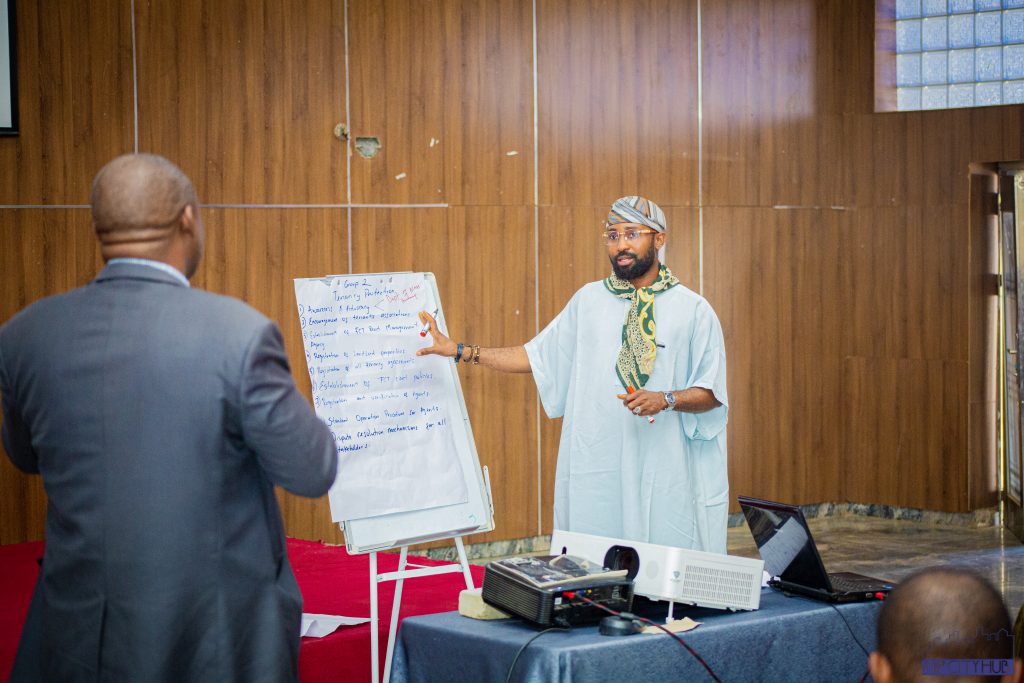
Three working groups then put the draft recommendations through a stress test. The housing affordability group proposed digitised, legally binding tenancy agreements, fixed price bands by location, and a hard cap on agency fees at just 5%, with inspection fees scrapped outright. The tenant protection group built the case for a dedicated FCT Rent Management Agency to handle landlord and agent registration, tenancy agreement records, and dispute resolution under one roof, alongside encouragement of neighbourhood-level tenants’ associations. The governance group mapped the FCT’s institutional architecture in detail, the Federal Capital Development Authority and the Federal Capital Territory Administration, and was refreshingly candid: no single existing body currently owns rent and tenancy matters in the FCT at all. That gap, more than anything else discussed on the day, will shape what happens next.
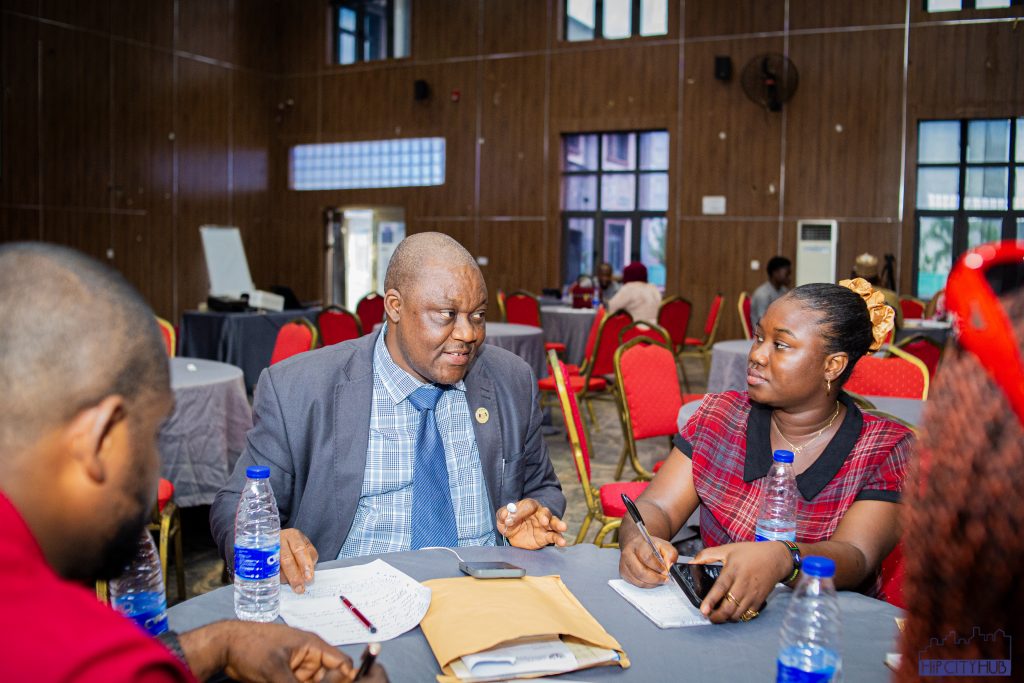
Participants proposed the Mass Housing Department of the Federal Capital Territory Authority as the most plausible existing structure to build this mandate around, while acknowledging it will need to be tested directly with government.
The session closed by looking ahead to the third and final stakeholder engagement, with government representatives and the Real Estate Developers Association of Nigeria. The mood in the room was pragmatic rather than idealistic: participants agreed government needs to hear what it stands to gain, not just an appeal to fairness, and several pointed to Abuja’s high number of vacant, unlet properties as proof that current rent practice isn’t just unjust, it’s economically wasteful.
Two sessions down, one to go. HipCity Innovation Centre thanks every professional body, NGO, and civil society partner who brought real expertise, and real disagreement, to the table on 18 June.